Outsourcing operational contracts has a number of benefits. It can when working well; ensure a high level of service; enable you to achieve value for money and efficiencies by engaging with specialists; free-up internal resources to drive value by focussing on the core operation; and also encourage innovation and knowledge transfer to your internal team.
However, in our experience of reviewing hundreds of Opex contracts, the reality can be somewhat different. You can be left with outcomes that fall short of your expected goals. Our earlier blog, see link below, highlights common red flags which may indicate an underlying issue.
10 red flags suggesting your contract could be running into trouble
It can be frustrating when these objectives start to slip away from your grasp. However identifying the extent of the issue and crucially understanding the root causes can help re-establish control; as can monitoring certain ‘key risk indicators’ that can provide an indicator of future problems.
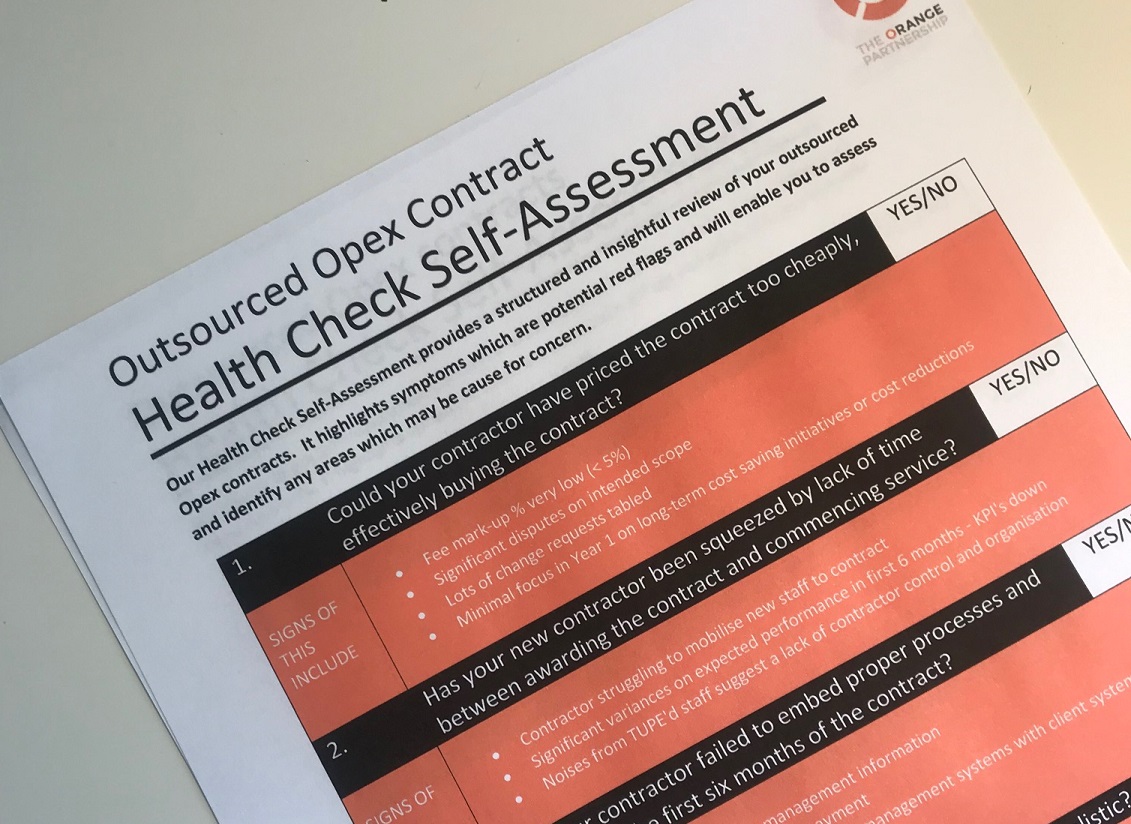
We have produced a simple Outsourced Opex Contract – Health Check Self Assessment which allows you to quickly (maximum ten minutes of your time) self-assess the risks associated with your own contracts. This will enable you to focus your assurance activity onto those areas which will provide the greatest enhancement in control and deliver a better level of assurance.
It will also show you where things may be broken.
Issues that appear to be unique or one-offs are often more common than you would think; with many organisations experiencing predictably similar root causes.
The benefit of sharing our experience with you, and you conducting your own self-assessment via the Outsourced Opex Contract – Health Check Self Assessment is that you’ll be better placed to identify the risks, and to ask the right questions of your own team and contractors, in order to get the assurance that the contract is delivering against your objectives.